
Opening a business crypto bank account in 2024 is no longer a niche activity reserved for early adopters. Regulatory clarity, mainstream adoption, and the growing need for digital asset management have pushed crypto banking for companies into the financial mainstream. As of October 2025, recent regulatory shifts in the United States have made the process more accessible than ever. The Office of the Comptroller of the Currency (OCC) and Federal Reserve have both signaled a more accommodating stance, allowing national banks to engage in select crypto activities without prior permission. This evolving context significantly streamlines the path for businesses seeking robust, compliant digital banking solutions.

Modern business team in a glass office reviewing crypto banking options on laptops, discussing step-by-step account setup and compliance requirements for 2024

Step 1: Assess Your Business Needs and Choose a Crypto-Friendly Bank

The first critical step is to assess your business’s operational requirements and identify a crypto-friendly bank that aligns with those needs. Consider whether your company will primarily trade, hold, or process payments in digital assets. Evaluate the provider’s range of supported cryptocurrencies, integration with existing accounting systems, transaction fees, and security protocols. Institutions such as Silvergate, Mercury, and new entrants like Slash are increasingly offering specialized services for crypto businesses. A careful assessment at this stage can help avoid costly mismatches down the line.

Step 2: Prepare Required Business Documentation

Once you have chosen a provider, gather all required business documentation. This typically includes incorporation papers, an Employer Identification Number (EIN), business licenses, and detailed information about your company’s ownership structure. Crypto bank account requirements in 2024 have become more standardized, but documentation expectations can vary by jurisdiction and provider. Having these materials organized in advance will expedite the application process and reduce back-and-forth with compliance teams.

Step 3: Verify Compliance Requirements (KYC/AML Policies)

No reputable crypto bank will overlook compliance. Be prepared to meet stringent KYC (Know Your Customer) and AML (Anti-Money Laundering) requirements. This involves disclosing beneficial ownership information, providing identification for all key stakeholders, and sometimes submitting to enhanced due diligence depending on your business model or jurisdiction. The regulatory environment has matured significantly since 2024, with most banks now offering clear guidance on what is required for crypto business banking onboarding.

How to Open a Business Crypto Bank Account: A Visual Step-by-Step Guide

A professional businessperson comparing different crypto-friendly banks on a digital tablet, with charts and crypto symbols in the background, modern office setting
Assess Your Business Needs and Choose a Crypto-Friendly Bank
Begin by evaluating your business’s requirements for crypto banking—consider transaction volume, supported cryptocurrencies, and integration needs. Research and select a reputable, crypto-friendly bank that aligns with your operational and regulatory needs. Recent regulatory changes in 2025 have made this step more accessible, with major U.S. banks now offering crypto services.
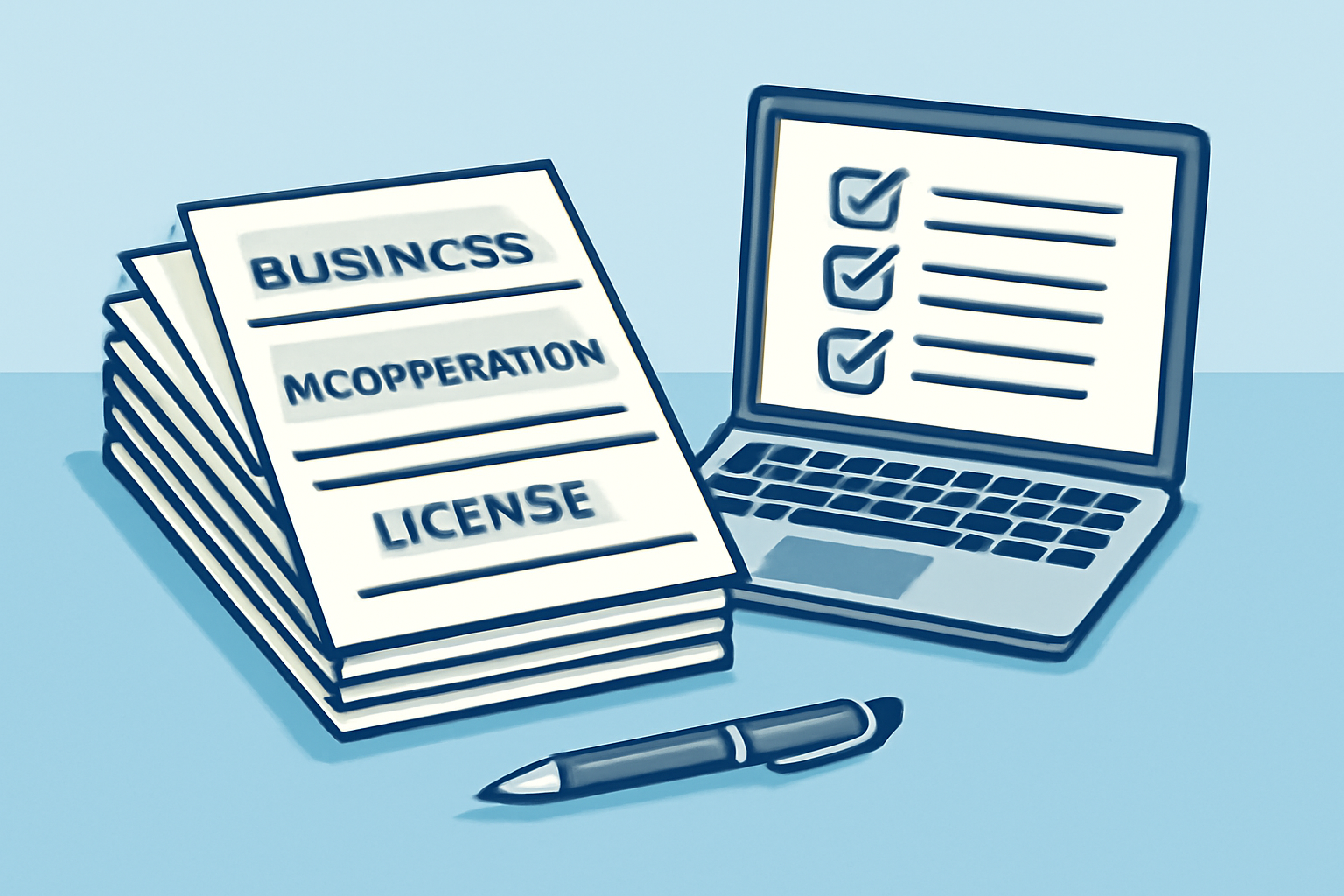
A neat stack of business documents, including incorporation papers and licenses, on a desk with a pen and a laptop displaying a checklist
Prepare Required Business Documentation
Gather all necessary documents, such as your business incorporation papers, Employer Identification Number (EIN), and relevant business licenses. These documents are essential for verifying your business’s legitimacy and will be required during the application process.
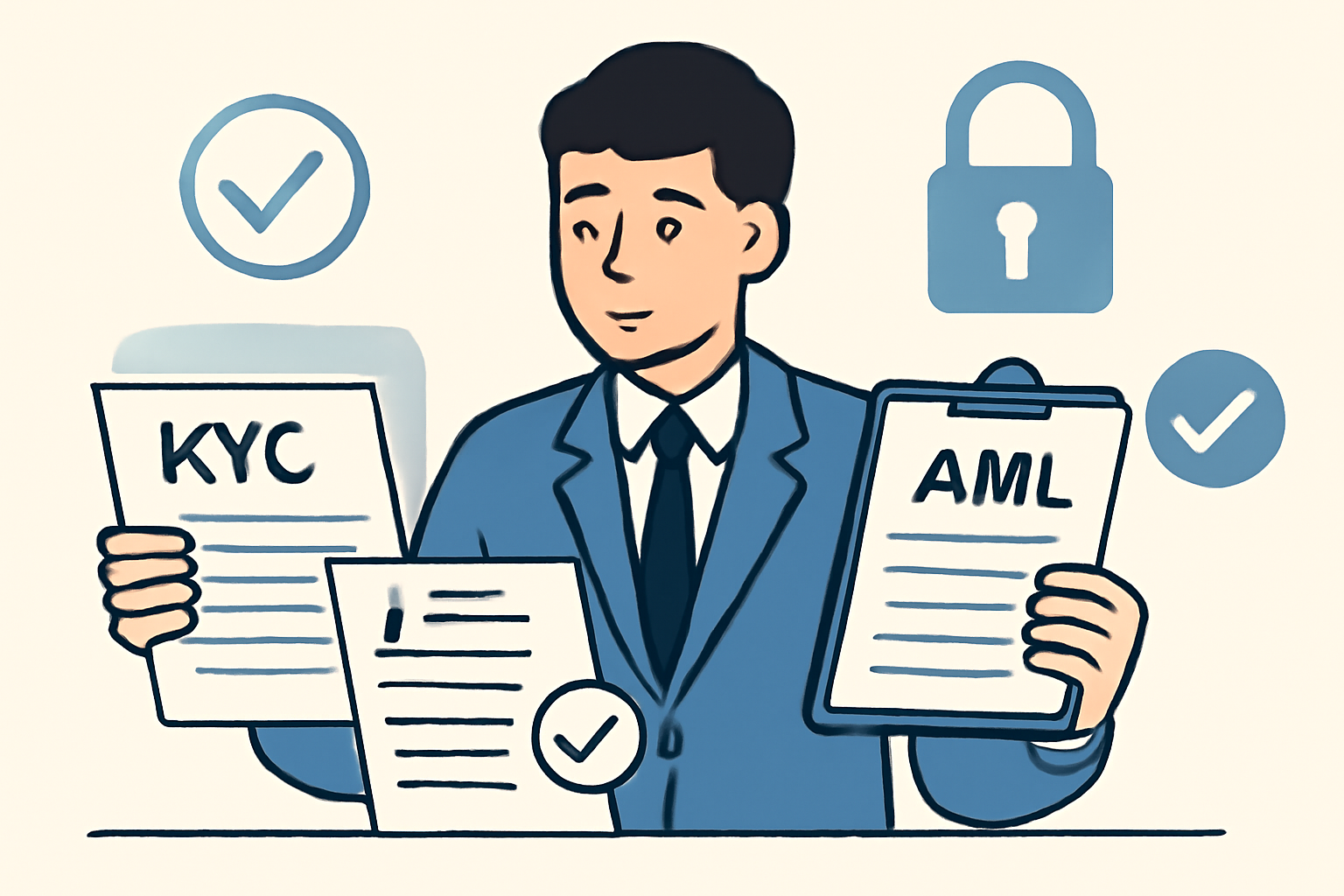
A compliance officer reviewing KYC and AML documents, with digital checkmarks and secure icons overlaying the image
Verify Compliance Requirements
Ensure your business is ready to meet the bank’s compliance standards, including Know Your Customer (KYC) and Anti-Money Laundering (AML) policies. Be prepared to disclose beneficial ownership information and demonstrate your internal compliance procedures.
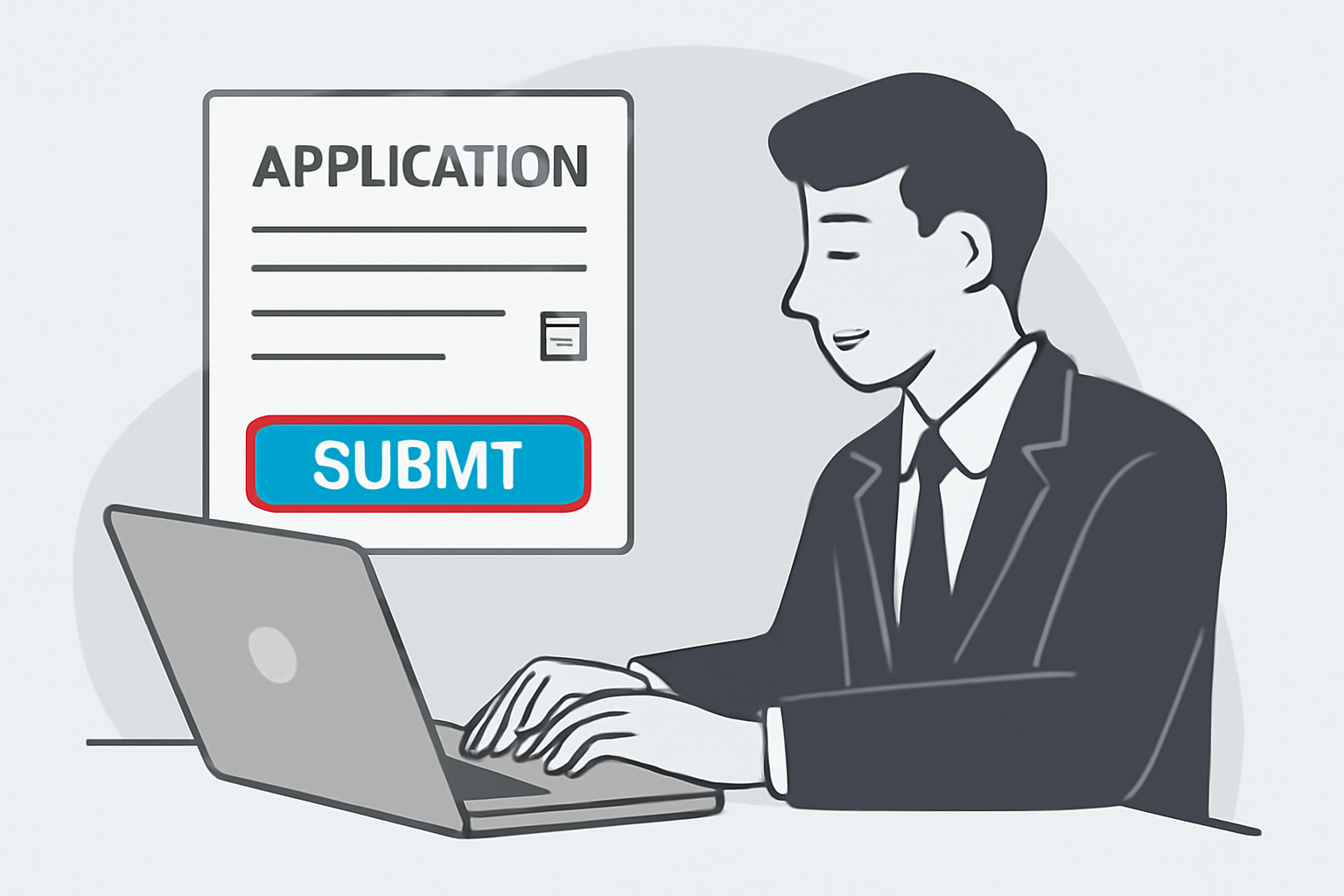
A business owner submitting an online application on a laptop, with a digital form and a 'submit' button highlighted, modern interface
Submit the Application via the Bank’s Online Portal or Relationship Manager
Complete and submit your application through the bank’s secure online portal or directly with a relationship manager. Double-check all information for accuracy to avoid delays. Most banks now streamline this process for crypto businesses.
A person holding up an ID card for verification, with a secure digital interface and verification checkmarks
Complete Identity Verification and Provide Additional Information if Requested
After submitting your application, complete any required identity verification steps. The bank may request additional documentation or clarification. Respond promptly to ensure a smooth approval process.
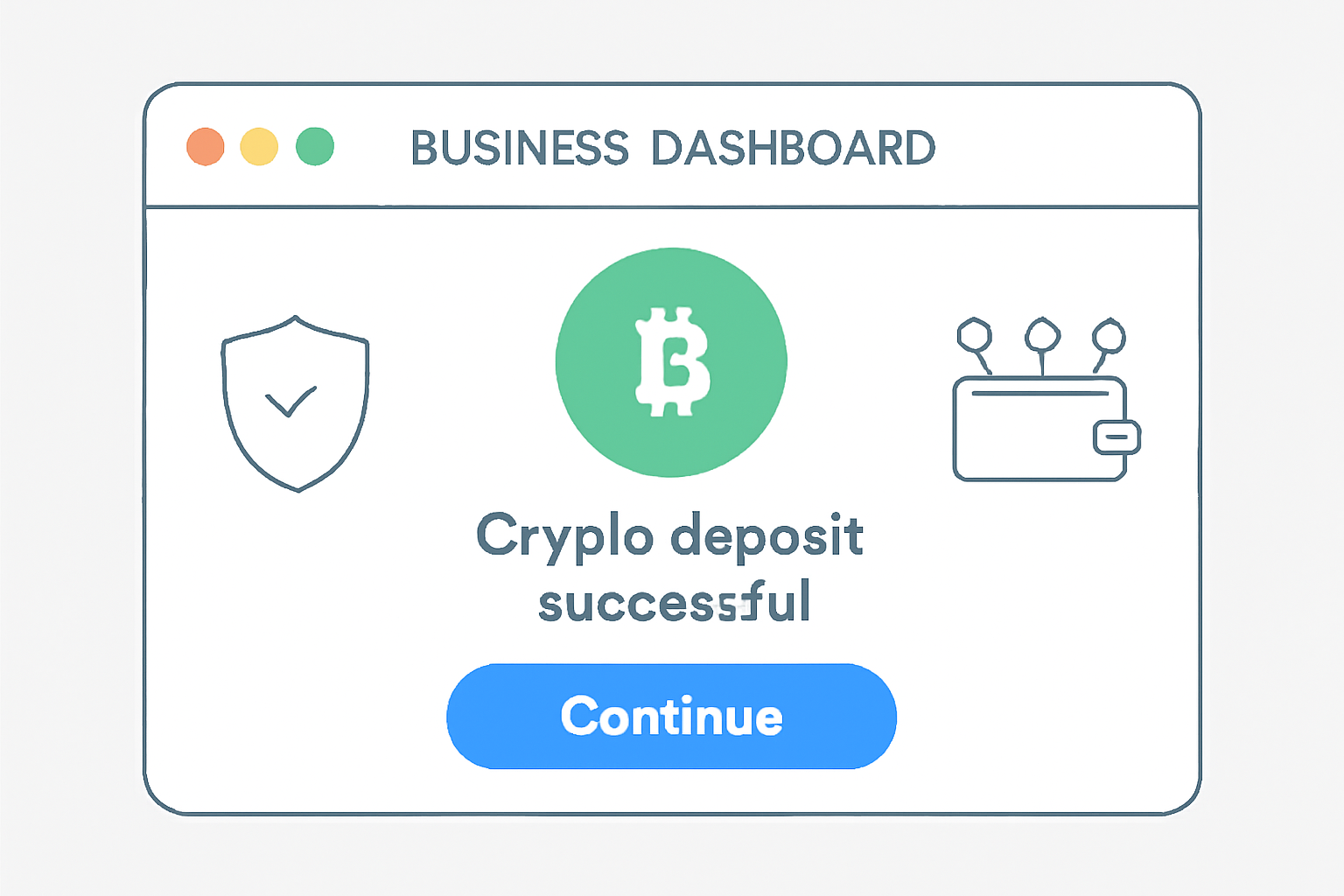
A business dashboard showing a successful crypto deposit, with security icons like a shield and multi-signature wallet symbols
Fund Your Account and Set Up Security Features
Once approved, deposit initial funds into your new crypto business account. Configure security features such as multi-signature wallets and user permissions to safeguard your assets and control access within your organization.

The initial three steps set the foundation for a secure and compliant account opening process. Each decision - from selecting a provider to preparing documentation - directly impacts your ability to operate efficiently within the evolving digital asset regulatory landscape. For more detailed walkthroughs tailored to specific jurisdictions or account types, see our comprehensive guide at How to Open a Business Account with a Crypto Bank: Step-by-Step Guide for 2024.

Step 4: Submit the Application via the Bank’s Online Portal or Relationship Manager

With all documentation and compliance details prepared, you are ready to submit your application. Most leading crypto-friendly banks now offer streamlined online portals designed for business onboarding. Here, you will upload your documents, fill out detailed business profiles, and answer tailored questions about your crypto activities. Some institutions may assign a dedicated relationship manager to guide you through the process, especially for higher-risk or larger-volume accounts. Expect initial feedback within a few business days, though timelines can vary based on the complexity of your business model and jurisdiction.

Step 5: Complete Identity Verification and Provide Additional Information if Requested

Upon preliminary review, banks will initiate identity verification procedures. This step is crucial for both regulatory compliance and account security. Be prepared for video calls, biometric verification, or additional background checks, especially if your business operates across multiple jurisdictions or handles significant transaction volumes. Banks may also request further supporting documents, such as proof of address for beneficial owners or enhanced due diligence questionnaires. Timely and transparent communication at this stage can prevent unnecessary delays.

Crypto Business Account Verification & Compliance: Essential FAQs

What documentation is typically required to open a business crypto bank account?
To open a business crypto bank account, you will generally need to provide official business documentation, such as incorporation papers, your Employer Identification Number (EIN), business licenses, and details of beneficial ownership. Banks may also request information about your business activities, source of funds, and anticipated transaction volumes. Ensuring all documents are up-to-date and accurate will streamline the verification process and reduce delays.
📄
How do banks verify compliance with KYC and AML regulations for crypto businesses?
Banks conduct thorough Know Your Customer (KYC) and Anti-Money Laundering (AML) checks, which include verifying the identities of directors, shareholders, and ultimate beneficial owners. This often involves submitting government-issued IDs, proof of address, and detailed business activity descriptions. Some banks may also require ongoing transaction monitoring and periodic compliance reviews to ensure continued adherence to regulations.
🔍
What should I expect during the identity verification process for a crypto business account?
During identity verification, you and your business partners will need to provide personal identification documents (such as passports or national IDs), proof of address, and possibly video or biometric verification. Banks may request additional information if your business operates in higher-risk jurisdictions or deals with large transaction volumes. Promptly responding to these requests is crucial for a smooth onboarding experience.
🛡️
Are there differences in compliance requirements between traditional and crypto-friendly business banks?
Yes, crypto-friendly business banks often have more rigorous compliance requirements than traditional banks due to the evolving regulatory landscape. In addition to standard KYC/AML checks, they may require detailed disclosures about your crypto activities, risk mitigation strategies, and transaction monitoring systems. Staying informed about the latest regulatory updates, such as the OCC and Federal Reserve's recent guidance, is essential for successful account approval.
⚖️
How can I ensure my business remains compliant after opening a crypto bank account?
To maintain compliance, regularly update your business documentation, promptly report any changes in ownership or business activities, and adhere to the bank’s ongoing monitoring requirements. Implementing strong internal controls, such as multi-signature wallets and user permissions, will further demonstrate your commitment to compliance and security. Periodic internal audits and staff training on regulatory obligations are also highly recommended.
🔒

Step 6: Fund Your Account and Set Up Security Features

Once your application is approved, you will receive instructions to fund your account. Initial funding thresholds vary by provider but are generally flexible for startups and SMEs. At this point, it is vital to configure robust security features: enable multi-signature wallets, set granular user permissions, and activate two-factor authentication (2FA) for all authorized users. Many banks now offer advanced dashboards for real-time monitoring of digital asset flows and access controls, empowering businesses to maintain operational oversight and mitigate risks proactively.

Security Essentials for Opening a Crypto Business Bank Account

  • Assess your business needs and select a reputable, crypto-friendly bank with robust security protocols.🏦
  • Prepare and securely store all required business documentation (incorporation papers, EIN, business licenses).📄
  • Review and verify compliance requirements, including KYC/AML policies and beneficial ownership disclosures.
  • Submit your application via the bank’s secure online portal or through a dedicated relationship manager.🌐
  • Complete identity verification and promptly provide any additional information requested by the bank.🔍
  • Fund your account and immediately configure advanced security features (multi-signature wallets, user permissions, 2FA).🔒
All essential security steps for your new crypto business bank account are complete. Your business is now positioned for secure and compliant crypto banking in 2024 and beyond.

Strategic Considerations in 2025’s Crypto Banking Environment

The regulatory landscape as of October 2025 remains dynamic but increasingly supportive of institutional crypto adoption. The recent OCC and Federal Reserve policy shifts have reduced friction for companies seeking to integrate digital assets with traditional banking infrastructure. However, businesses must remain vigilant regarding ongoing compliance obligations, periodic account reviews, and evolving best practices for safeguarding digital assets. As crypto banking for companies becomes mainstream, expect further innovation in service offerings, from automated tax reporting to on-chain audit trails tailored for enterprise use.

Each step in this process, from assessing needs to securing your account, builds toward a compliant, resilient foundation for your company’s digital asset operations. For an expanded discussion on provider comparisons and jurisdiction-specific nuances, refer to our complete resource at How to Open a Business Account with a Crypto Bank: Step-by-Step Guide for 2024.