
Crypto banking in 2025 is a battlefield of features, rates, and user experience. LayerBankFi has emerged as a standout DeFi protocol, promising not just the basics of lending and borrowing but a unified, cross-chain experience that’s both flexible and transparent. As users demand more from their crypto banks - seamless interoperability, real yield, and robust risk management - LayerBankFi’s approach is worth a disciplined look.
What Sets LayerBankFi Apart in 2025?
The DeFi space is crowded with lending protocols. Yet few match LayerBankFi’s breadth: it supports over 17 blockchain networks, including Rootstock, Plume, and Movement. This isn’t just a technical flex; it means users can supply or borrow assets across multiple ecosystems without fragmenting their liquidity or juggling multiple dApps. In an era where capital efficiency is king, this cross-chain compatibility is more than convenience - it’s an edge.
LayerBankFi’s promise of fair and flexible interest rates isn’t just marketing speak. The protocol features an automated rate adjustment system that dynamically balances risk during extreme market volatility. Unlike static-rate platforms that often punish one side of the market, LayerBankFi’s rates reflect real-time supply-demand dynamics across all supported chains.
Earning Yield: The lToken System Explained
For users looking for crypto bank high yield savings, the process is straightforward: deposit assets into LayerBankFi’s lending pools and receive lTokens (e. g. , lUSDC) in return. These tokens represent your share of the pool and accrue interest automatically as borrowers pay to access liquidity. For example, supplying 100 USDC mints you 100 lUSDC; as interest accrues daily, your lUSDC balance increases in value proportionally.
This model benefits both passive holders seeking yield and active traders who want to maximize capital efficiency without sacrificing security. All net yields (APR) are displayed transparently and update in real time based on market conditions - no hidden fine print or surprise fees buried in the codebase.
Borrowing Against Crypto: Collateralization and Liquidation Mechanics
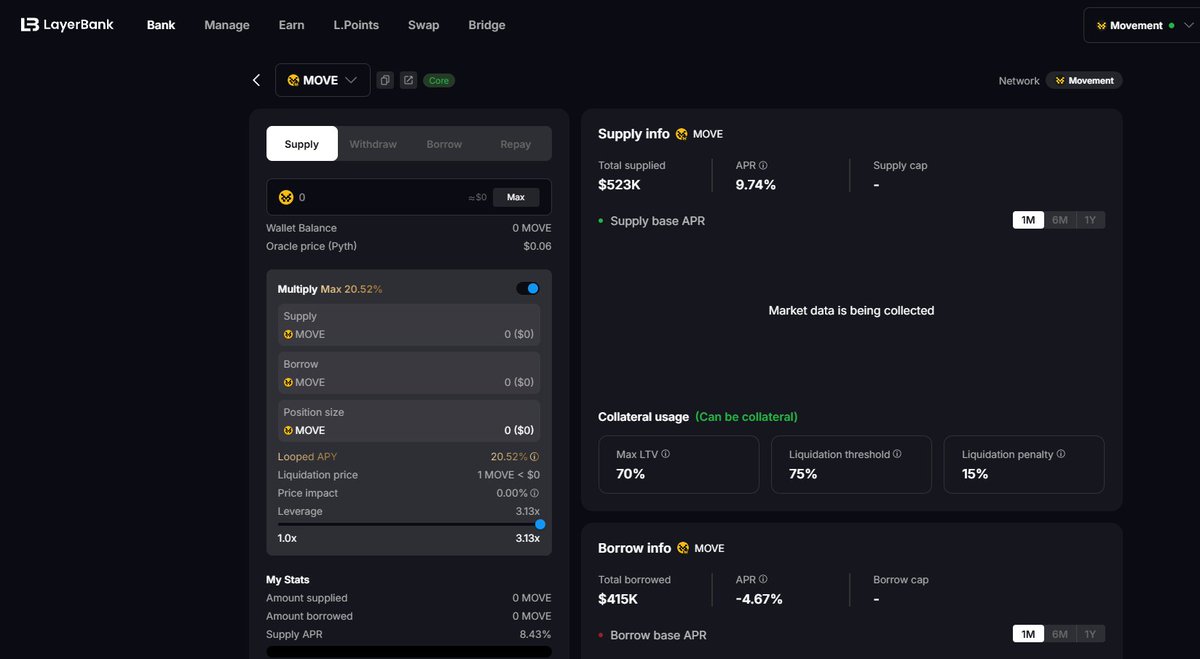
LayerBankFi offers robust tools for those looking to borrow against crypto. Users must supply collateral; borrowing power is determined by asset-specific Loan-to-Value (LTV) ratios. For instance, if the Max LTV for USDC is 80%, supplying $1,000 USDC allows you to borrow up to $800 worth of another supported asset.
The system tracks your Health Factor in real time - if it drops below 1.0 due to price swings or increased debt, liquidation mechanisms kick in to protect both lenders and the protocol itself. This disciplined approach ensures systemic stability while giving borrowers clear guardrails for managing risk.
L. Points Reward Program and Capital Efficiency Features
LayerBankFi goes beyond basic earn-and-borrow functions with its L. Points rewards program. Every dollar supplied earns you points (0.3 L. Points per $1), while borrowing earns even more (2.4 L. Points per $1). These points aggregate across all chains into a single global balance - an elegant solution that incentivizes activity regardless of network choice.
The platform also introduces Efficiency Mode (E-Mode) for correlated assets like RBTC and mBTC on Rootstock chain, allowing higher LTV ratios (up to 85%). This unlocks advanced strategies such as leveraged yield farming while maintaining prudent risk controls through automated monitoring.
Security is a non-negotiable in DeFi, and LayerBankFi’s approach is pragmatic. The protocol’s smart contracts have undergone multiple independent audits, with vulnerabilities addressed promptly. This commitment to transparency extends to its fee structure: users can easily review the costs associated with lending, borrowing, or swapping assets on any supported blockchain. There are no hidden charges, just clear terms that align with the expectations of both retail and institutional users.
The user experience is another area where LayerBankFi excels. The dashboard, built for clarity, distills complex DeFi actions into simple steps: deposit, borrow, repay. Even across 17 and chains, navigation remains intuitive, a testament to disciplined product design focused on real utility rather than flashy gimmicks.
Comparing LayerBankFi to Traditional and DeFi Banking
It’s worth scrutinizing how LayerBankFi stacks up against both legacy banks and rival DeFi protocols. Traditional banks still lag in offering instant settlement or borderless access to capital; their savings rates rarely match even the most conservative crypto yields. In contrast, LayerBankFi delivers real-time interest accrual, flexible collateralization options, and global accessibility, without requiring users to trust a centralized intermediary.
Against other top DeFi lenders in 2025, LayerBankFi’s cross-chain liquidity and dynamic rate engine set it apart. Many competitors remain siloed within a single network or lack transparent risk controls during periods of market stress. Here, the automated rate adjustment mechanism does more than tweak APRs, it actively manages protocol health during volatility spikes, safeguarding both lenders and borrowers.
Who Should Use LayerBankFi?
If you’re seeking crypto bank high yield savings, want to borrow against crypto without friction across chains, or value transparent governance and fees, LayerBankFi is a serious contender for your digital asset strategy. Power users will appreciate E-Mode for advanced leverage plays; newcomers benefit from straightforward onboarding and real-time risk metrics.
The L. Points program adds an extra layer of incentive for active participation, potentially valuable if future governance or rewards are tied to point accumulation (a trend seen across top DeFi protocols). For businesses managing treasury operations or individuals optimizing yield on idle assets, LayerBankFi’s unified interface reduces operational complexity while maximizing capital efficiency.
Risks and Governance Considerations
No DeFi protocol is risk-free. Smart contract exploits remain a sector-wide concern despite audits; cross-chain bridges can be targets for attackers. Users must also monitor their Health Factor closely when borrowing, liquidation events are algorithmic and swift if collateral values drop suddenly.
LayerBankFi’s governance remains relatively centralized compared to some older protocols but is trending toward greater community input as usage grows. Future updates may introduce more decentralized decision-making around fees or supported assets, a positive sign for long-term resilience.
Final Thoughts: Is LayerBankFi Among the Best DeFi Banks of 2025?
The crypto banking landscape in late 2025 rewards platforms that combine robust risk management with user-centric innovation. LayerBankFi has carved out a leadership position through cross-chain liquidity unification, fair rates powered by real-time market data, and meaningful reward programs that actually incentivize productive use, not just speculation.
If your priorities include security-first design, transparent rates without fine print, high-yield savings options across chains, and advanced tools like E-Mode for capital efficiency, LayerBankFi deserves a place on your shortlist of best DeFi banks this year.





No comments yet. Be the first to share your thoughts!