
In the fast-evolving world of finance, crypto-backed lending from US banks is no longer a fringe idea; it's becoming a core service for savvy investors. As of late 2025, major institutions like JPMorgan Chase, Bank of America, and others are letting clients borrow against their Bitcoin and Ethereum holdings without selling those assets. This unlocks liquidity while you hold onto potential upside, all backed by familiar banking security. With regulatory nods from the OCC, these offerings blend traditional lending with digital assets, making crypto lending from traditional banks accessible to qualified clients.
The momentum builds on pilots with stablecoins, custody, and trading that banks have tested alongside partners like Coinbase. Now, banks offering crypto loans 2025 focus on institutional and high-net-worth clients first, with loan-to-value ratios up to 50% and collateral held by custodians. Interest rates hover around 10% APR or better for top tiers, varying by profile. Let's dive into the leaders shaping this space.
JPMorgan Chase Pioneers Institutional Crypto Collateral
JPMorgan Chase is at the forefront of JPMorgan crypto collateral loans, planning to enable institutional clients to pledge Bitcoin and Ethereum for loans by year's end. They partner with third-party custodians for secure storage, ensuring assets stay off their balance sheet while providing cash loans. This fits their broader digital asset push, including tokenized deposits and stablecoin experiments. Clients appreciate the familiarity of JPMorgan's private banking alongside crypto flexibility, avoiding taxable sales events. Minimums target sophisticated investors, with LTV caps at 50% to manage volatility risks.
Bank of America Embraces Stablecoins and Lending Potential
Bank of America stands out with its recommendation for 1-4% portfolio allocations to crypto, signaling confidence in assets like Bitcoin as a 'gold rival. ' While exploring G7-pegged stablecoins, they're aligning with crypto-backed lending trends through Merrill and private banking arms. Expect loans using crypto collateral soon, building on custody pilots with Coinbase. This inclusive approach suits diverse clients, from Merrill Edge users to high-net-worth individuals, emphasizing transparent terms and competitive rates starting near market lows of 10.4% APR.
Goldman Sachs set the early pace, offering crypto-backed loans to wealthy clients since 2022. Their digital asset team now expands these services, accepting Bitcoin as collateral for seamless borrowing. Wells Fargo follows with exclusive offerings for institutional clients holding at least $1 million in assets, requiring private banking ties and full financial reviews. These banks prioritize security, using custodians to mitigate risks while delivering liquidity.
Citigroup and U. S. Bancorp Expand Access Prudently
Citigroup, or Citi, navigates regulatory reviews to integrate Citi Bank Bitcoin borrowing into its private bank. Plans include crypto collateral for loans, leveraging tokenized deposit pilots. This positions Citi as a bridge for clients blending fiat and digital worlds. Meanwhile, U. S. Bancorp runs pilot programs in select states for existing customers with $100,000 minimum crypto holdings, capped at 20% reserves from Bitcoin and Ethereum. Their measured rollout builds trust, with straightforward LTVs and rates tailored to client history.
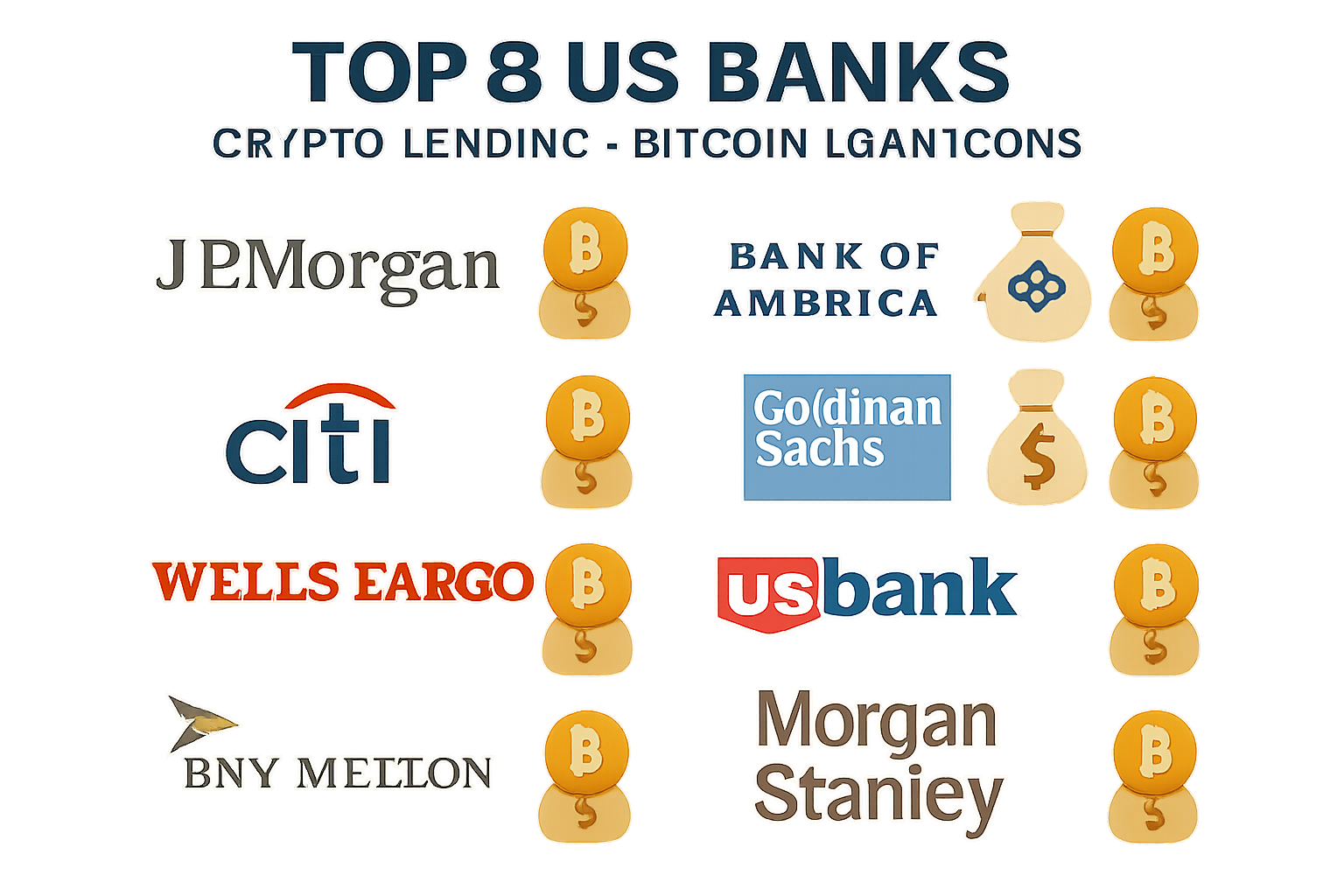
Top 8 US Banks: Crypto-Backed Lending Comparison (Rates & Requirements, 2025)
| Bank | Max LTV Ratio | Min. Assets Required | Supported Collateral | Est. APR |
|---|---|---|---|---|
| JPMorgan Chase | 50% | $1M (institutional) | BTC, ETH | 10.4% - 12% |
| Bank of America (BofA) | 50% | $500K | BTC, ETH | 11% - 13% |
| Citigroup (Citi) | 40% (planned) | $750K | BTC, ETH | 12% - 14% |
| Goldman Sachs | 60% | $2M | BTC, ETH | 9.5% - 11.5% |
| Wells Fargo | 50% | $1M (investable) | BTC, ETH | 10.8% - 13% |
| U.S. Bancorp | 20% | $100K (crypto holdings) | BTC, ETH | 12% - 15% |
| BNY Mellon | 50% | $5M | BTC, ETH | 10% - 12% |
| Morgan Stanley | 45% (planned 2026) | $1M | BTC, ETH | 11.5% - 13.5% |
BNY Mellon and Morgan Stanley round out the pack with custody expertise turning into lending plays. BNY's tokenization efforts pave the way for collateralized loans, while Morgan Stanley eyes crypto options for E*Trade by 2026, extending to borrowing. Across these banks, eligibility hinges on established relationships and substantial holdings, fostering a secure entry into crypto backed lending US banks. As requirements evolve, direct consultations reveal personalized rates and terms.
This first wave reflects Wall Street's pragmatic embrace of crypto, driven by client demand and clearer rules. Investors gain tools to leverage holdings efficiently, all within regulated frameworks.
To make the most of these opportunities, understanding the nitty-gritty of rates and requirements is key. While exact figures depend on your profile and market conditions, patterns emerge across crypto backed lending US banks. Loan-to-value ratios generally cap at 50%, letting you borrow up to half your collateral's value to buffer against price swings in Bitcoin or Ethereum. Interest rates start around 10.4% APR for prime clients, often lower than pure crypto lenders due to banks' scale and lower funding costs. Collateral stays locked with custodians, and loans avoid triggering capital gains taxes, a huge win for long-term holders.
Tailored Offerings from Wells Fargo, BNY Mellon, and Beyond
Wells Fargo keeps it exclusive, targeting institutional clients with at least $1 million in investable assets. You need a private banking relationship and a thorough financial review before accessing their crypto lending from traditional banks. This setup ensures only prepared borrowers dive in, with Bitcoin and Ethereum as prime collateral. BNY Mellon leverages its custody prowess, where tokenized assets flow into lending. They're piloting collateralized loans for institutional players, emphasizing seamless integration with traditional portfolios. Think secure, scalable options that fit enterprise needs without the hassle of external platforms.
Morgan Stanley rounds out the leaders by gearing up for broader access. Their E*Trade push in early 2026 will likely include borrowing against crypto, building on custody and advisory services. Goldman Sachs, already a veteran, sweetens the deal for high-net-worth clients with customized terms since their 2022 debut. These banks prioritize relationships, so start with your existing advisor to unlock competitive edges like tiered rates or bundled services.
Navigating eligibility means matching your situation to each bank's thresholds. JPMorgan Chase favors institutions with hefty portfolios, while U. S. Bancorp opens pilots to customers holding $100,000 in Bitcoin or Ethereum. Citigroup awaits final regulatory green lights but promises private bank integration soon. Bank of America casts a wider net through Merrill, appealing to everyday investors eyeing that 1-4% allocation. Across the board, expect KYC checks, volatility stress tests, and ongoing monitoring to keep loans healthy.
What sets these offerings apart? Security and familiarity. Unlike decentralized platforms, you get FDIC-insured fiat loans, robust compliance, and personalized guidance. Sure, rates might not undercut specialist lenders, but the peace of mind counts for many. I see this as finance democratizing, high-net-worth folks led the charge, but pilots hint at retail expansion. Just weigh the risks: crypto dips could trigger margin calls, forcing sales at lows. Diversify, borrow conservatively, and treat it as a tool, not a shortcut.
For a quick snapshot, consider how these stack against pure-play crypto lenders. Banks shine in stability and integration, though with stricter entry. As 2025 wraps, watch for rate tweaks amid Bitcoin's steadiness and Ethereum upgrades boosting collateral appeal. Reach out to your bank early; spots in pilots fill fast, and terms evolve with regs. This shift empowers you to blend worlds, turning holdings into working capital without letting go.





No comments yet. Be the first to share your thoughts!