

In the ever-evolving landscape of digital finance, Monument Bank’s announcement to tokenize up to £250 million in retail customer deposits on the Midnight Network stands as a pivotal moment. As a UK-regulated institution overseeing £7 billion in total deposits, Monument is pioneering the first on-chain banking solution of its kind in the country. This initiative bridges traditional banking safeguards with blockchain efficiency, allowing clients to hold interest-bearing savings as digital tokens while maintaining full backing and protection under the Financial Services Compensation Scheme (FSCS). For investors like myself, who prioritize secure, long-term wealth building, this development signals a maturing crypto banking ecosystem where regulation and innovation coexist.

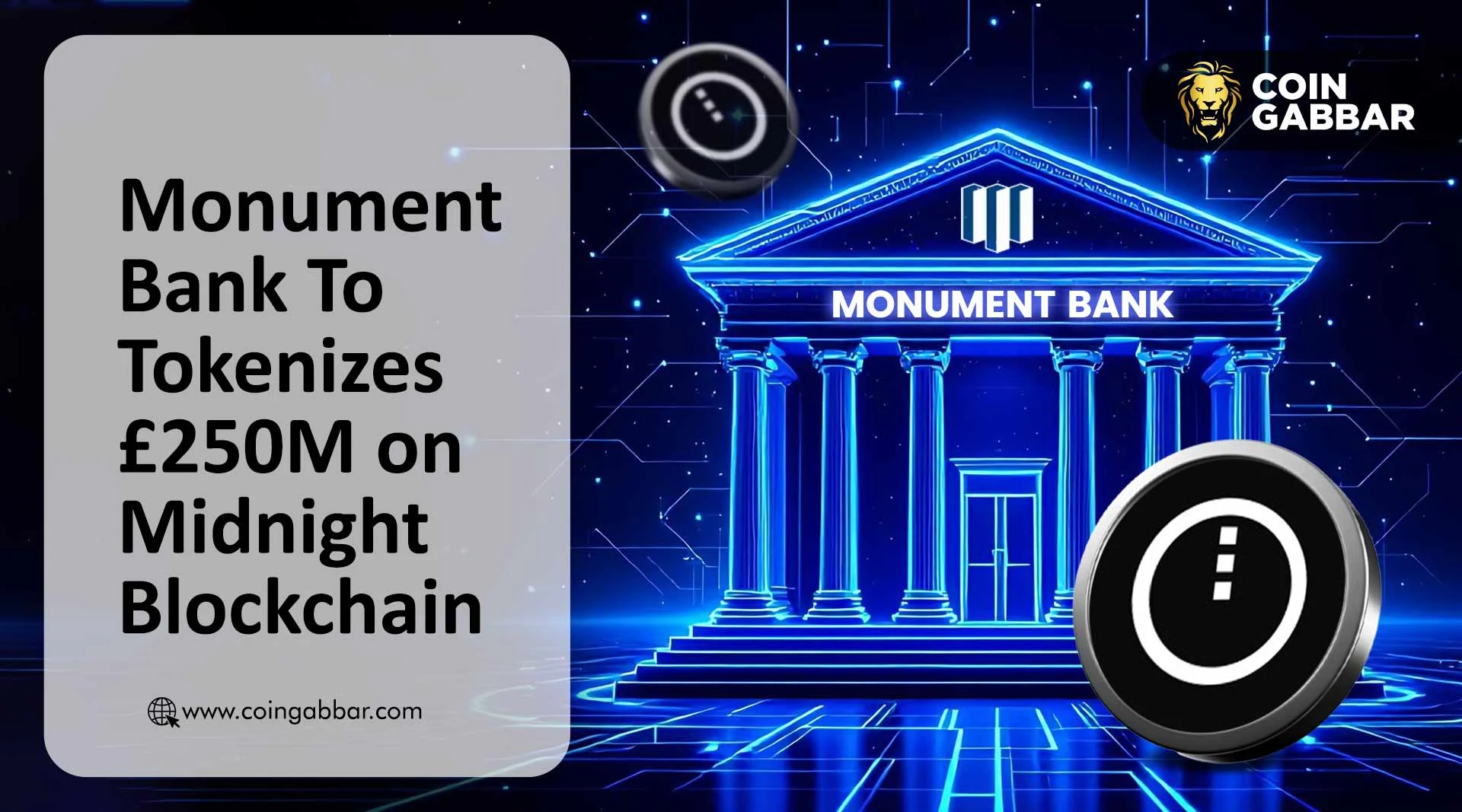
The essence of Monument Bank tokenization lies in its seamless integration of real-world assets into a programmable, privacy-enhanced blockchain. Each token represents actual pounds sterling held securely at the bank, redeemable at any time. Unlike speculative crypto assets, these tokenized deposits retain their interest accrual, ensuring savers continue earning yields comparable to traditional accounts. This isn’t mere experimentation; it’s a strategic pivot toward retail deposits blockchain infrastructure that could redefine liquidity management for everyday users and institutions alike.
Navigating Regulation in On-Chain Banking
Monument’s move underscores the UK’s forward-thinking regulatory environment, particularly post its crypto asset regime advancements. By partnering with the Midnight Foundation, the bank ensures compliance from the outset. Transaction data remains visible only to Monument and its customers, leveraging Midnight’s zero-knowledge proofs to shield sensitive information. This privacy layer addresses a core concern in public blockchains: transparency without exposure.
Monument is set to become the first UK-regulated bank to tokenize retail customer deposits on a public blockchain.
From a macroeconomic perspective, this tokenization enhances capital efficiency. Banks traditionally hold deposits in low-yield reserves; tokenizing them unlocks potential for 24/7 transferability and composability with DeFi protocols, all under regulated oversight. Yet, risks persist – smart contract vulnerabilities or blockchain congestion could disrupt access, though Midnight’s design mitigates many such issues through its proof-of-stake consensus and data protection mechanisms.

Midnight Network: The Privacy Powerhouse Enabling Secure Tokenization
Midnight Network emerges as the unsung hero here, a blockchain tailored for confidential smart contracts. Built on Cardano’s foundations but optimized for data privacy, it uses advanced cryptography to process transactions without revealing underlying details. For Midnight Network banking, this means Monument clients can engage in on-chain activities – from transfers to future yield farming – without broadcasting balances publicly.
Consider the implications for portfolio construction. Tokenized deposits could serve as collateral in permissioned lending markets, offering yields superior to conventional savings while preserving FSCS coverage up to £85,000 per depositor. My analysis of similar pilots, like those from BMO or other tokenized deposit experiments, suggests adoption hinges on user interfaces; Monument must deliver intuitive apps to onboard non-crypto natives seamlessly.
Phased Implementation: From Deposits to Full Ecosystem
Monument’s roadmap unfolds in deliberate stages, reflecting prudent risk management. Phase one focuses on tokenizing deposits, enabling instant, borderless transfers with bank-grade security. Subsequent phases introduce tokenized investment products like private equity and commodity funds, directly accessible via blockchain. Finally, lending against these holdings will create a closed-loop economy, where savers become borrowers or investors without leaving the platform.
This progression aligns with broader trends in UK regulated crypto deposits. As a CFA charterholder tracking these shifts, I see parallels to the tokenization of US Treasuries or real estate, but Monument’s retail focus democratizes access. Retail investors, often sidelined in high-minimum institutional products, gain entry to diversified assets programmatically. However, success demands robust oracle integrations for off-chain pricing and continuous audits to uphold FSCS equivalency.
Early indicators point to strong momentum. With £250 million targeted initially – a fraction of Monument’s £7 billion book – scalability testing will be crucial. If executed well, this could catalyze competitors, accelerating on-chain banking Monument adoption across Europe.
Scalability challenges aside, Monument’s initiative invites scrutiny on its competitive positioning. Compared to peers experimenting with tokenized deposits, such as BMO’s institutional efforts, Monument’s retail emphasis sets it apart. This tokenized deposits crypto approach targets everyday savers, not just high-net-worth clients, potentially capturing a vast untapped market. My 17 years in portfolio construction highlight how such innovations could shift allocation strategies; imagine layering tokenized savings into diversified portfolios with automated rebalancing via smart contracts.
Investor Perspectives: Opportunities in Monument’s Ecosystem
For strategic investors, Monument Bank tokenization opens doors to enhanced yield generation without sacrificing principal protection. Interest-bearing tokens maintain FSCS safeguards, a rarity in DeFi where yields often come with uninsured risks. Clients might soon collateralize these tokens for loans at competitive rates, fostering a virtuous cycle of saving and investing. This composability could yield compounded returns surpassing traditional fixed-income options, especially in a low-interest environment.
Yet, prudence dictates a balanced view. While Midnight’s privacy features excel, interoperability with other chains remains nascent. Bridging to Ethereum or Solana ecosystems might introduce friction, diluting the ‘on-chain banking Monument’ promise. Monument must prioritize cross-chain standards to avoid siloed liquidity, a pitfall I’ve observed in early tokenized asset pilots.
Regulatory tailwinds further bolster optimism. The UK’s stablecoin framework and upcoming crypto rules provide a fertile ground for expansion. Monument’s £7 billion deposit base offers ample collateral for growth, positioning it as a frontrunner in crypto bank Monument review discussions. Early adopters stand to benefit from preferential yields or exclusive access, incentivizing uptake among tech-savvy savers.
Risk Mitigation: Balancing Innovation with Stability
Tokenization amplifies banking efficiency but amplifies risks too. Operational resilience tops the list; any downtime in Midnight’s network could freeze assets temporarily, eroding trust. Monument counters this with phased rollouts and rigorous testing, drawing from Cardano’s proven uptime. Cybersecurity looms large, yet zero-knowledge proofs inherently limit attack surfaces by obscuring data.
Market volatility indirectly affects tokenized deposits through opportunity costs. If DeFi yields spike, savers might migrate, pressuring retention. Monument’s edge lies in regulated familiarity, appealing to conservative profiles wary of pure crypto plays. From my macroeconomic lens, this hybrid model hedges against fiat inflation while tapping blockchain programmability.

Broader ecosystem synergies promise acceleration. Partnerships for oracle feeds could enable real-time pricing for tokenized funds, unlocking private equity exposure previously gated by minimums. Commodity funds add diversification, shielding portfolios from equity downturns. Lending phase completion might mirror overcollateralized models like Aave, but with bank oversight, reducing liquidation cascades.
Reflecting on Monument’s trajectory, this venture cements its role as a digital finance innovator. Savers gain programmable money with traditional protections; investors unlock fluid capital markets. As adoption scales beyond £250 million, ripple effects could standardize retail deposits blockchain practices continent-wide. For those building wealth patiently, Monument exemplifies foresight in action, merging yesterday’s safeguards with tomorrow’s efficiencies. The crypto banking revolution advances, one tokenized pound at a time.
About the Author